A conservation action plan to protect Europe’s teasel-plant bees
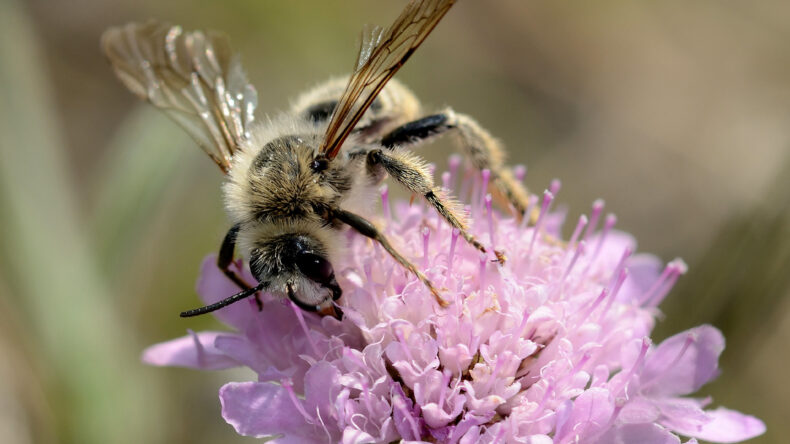
During summer, when teasel plants are in flower, these grasslands provide essential nectar and pollen not only for specialised bees, but also for a wide range of other pollinators and flower-visiting insects. The conservation of teasel plant-rich grasslands therefore supports entire pollinator communities, and the ecosystems and agricultural systems that depend on them.
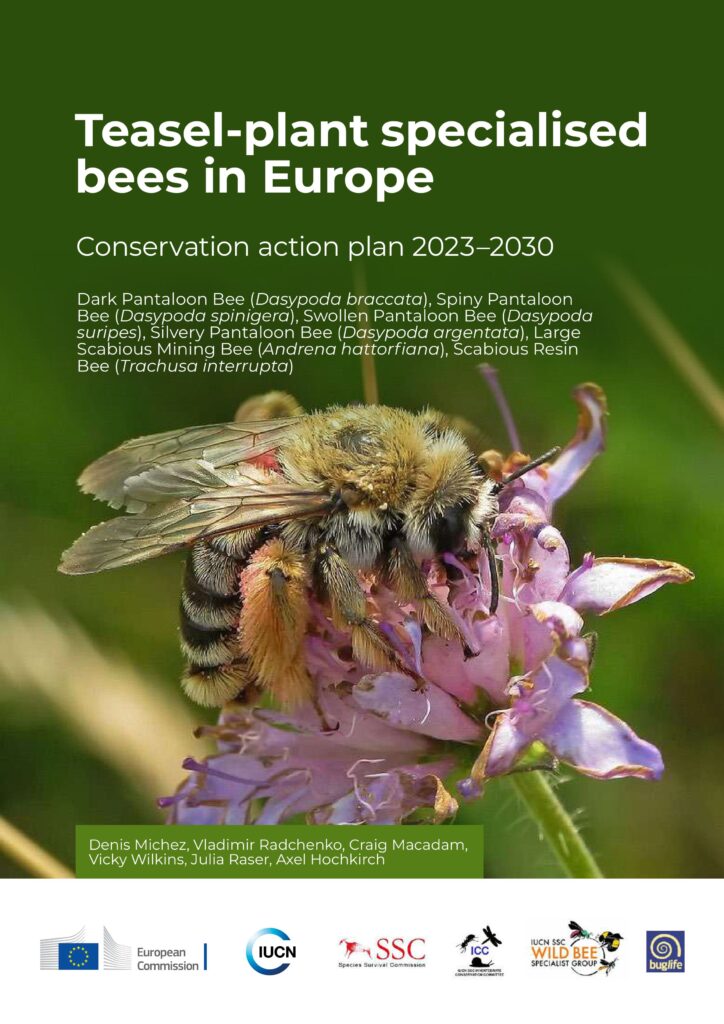
Launched in 2023 under the European Commission’s EU Pollinators Initiative, the Teasel-plant specialised bees in Europe – Conservation Action Plan 2023–2030 aims to strengthen the protection of some of Europe’s most threatened pollinators. Pollinator populations, including specialised wild bees, are declining rapidly and becoming increasingly fragmented as a result of agricultural land-use change, habitat loss, urbanisation and climate change.
Recent IUCN Red List assessments underline the urgency of this work. In October 2025, IUCN reported that nearly 100 additional wild bee species in Europe have now been classified as threatened, with more than 20% of species in groups such as bumblebees and cellophane bees facing a risk of extinction. At the same time, the number of threatened European butterfly species increased by 76% over the last decade. These findings confirm that specialised pollinators, including teasel-plant bees, are part of a wider and accelerating biodiversity crisis driven by habitat loss, agricultural intensification, pollution and climate change.
This Action Plan is one of three developed by the International Union for Conservation of Nature (IUCN), in collaboration with the IUCN Species Survival Commission, the Invertebrate Conservation Committee, the SSC Wild Bee Specialist Group and Buglife. Together with the Action Plans for Canarian Island pollinators and veteran tree hoverflies, it forms a coordinated, science-based European response to halt pollinator decline across diverse ecosystems.
The teasel-plant bees Action Plan focuses on six key wild bee species that serve as umbrella species for the conservation of teasel-rich grassland communities: the dark pantaloon bee (Dasypoda braccata), the spiny pantaloon bee (Dasypoda spinigera), the swollen pantaloon bee (Dasypoda suripes), the silvery pantaloon bee (Dasypoda argentata), the large scabious mining bee (Andrena hattorfiana) and the scabious resin bee (Trachusa interrupta). Four of these species are classified as Endangered on the IUCN Red List of Threatened Species™, while two are listed as Near Threatened.
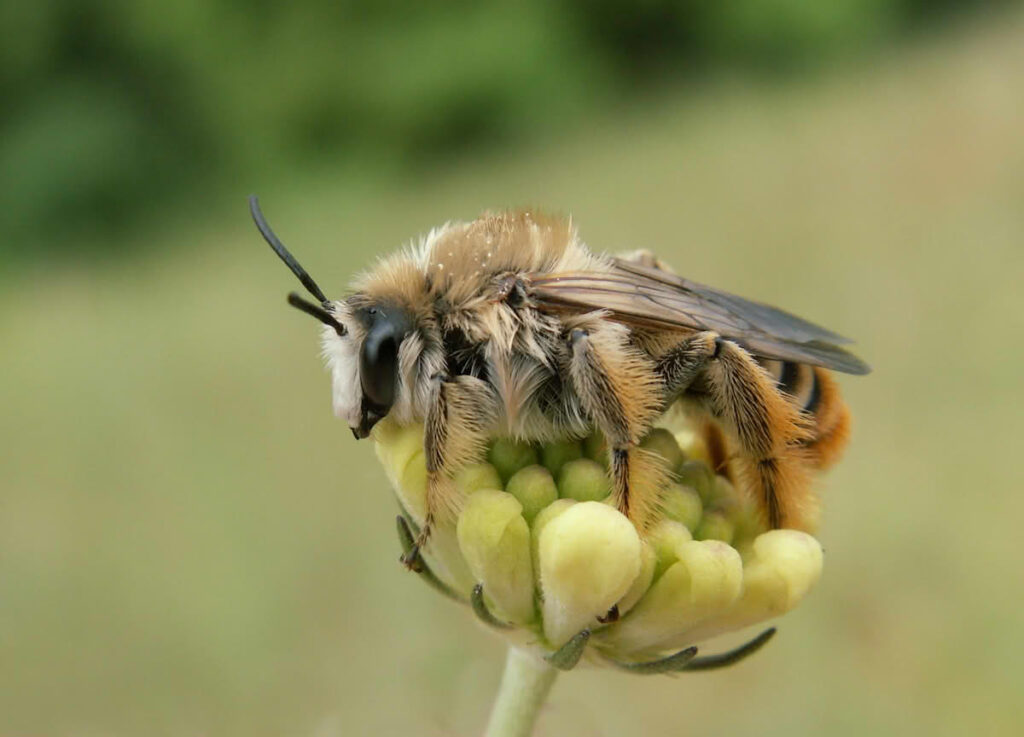
These bees are becoming increasingly threatened. Some species now persist in very small, isolated populations requiring highly targeted conservation measures, while others remain poorly studied. Their decline is driven by a combination of interacting pressures.
- The most severe threat is habitat loss and fragmentation, caused by changes in agricultural land use, including conversion of grasslands to arable land or forest, intensification of grassland management, land abandonment, and the expansion of urban areas and infrastructure.
- Nitrogen deposition further degrades suitable habitats. Teasel-rich meadows and the bare ground required for nesting typically occur in nutrient-poor environments; increased nutrient inputs alter plant communities and reduce the availability of suitable nesting and foraging sites.
- Competition for pollen from domestic honeybees can also place additional pressure on wild bee populations, particularly in areas or periods with low flower availability, which often coincides with the flowering period of teasel plants.
In response, the Action Plan sets out a comprehensive framework to improve the conservation status of teasel-plant bees. Its objectives include strengthening governance and legal protection at national and European levels, improving habitat management, better integrating these species into existing biodiversity and pollinator strategies, and expanding research on population status, trends and landscape connectivity. The plan also aims to reduce key threats through improved knowledge, the development of monitoring tools, and increased public awareness.
Priority actions include improving taxonomic, ecological and habitat data; updating national Red List assessments and strengthening European policy frameworks; expanding the coverage and management effectiveness of protected areas; establishing harmonised monitoring protocols; restoring ecological corridors; promoting pollinator-friendly pest management; and engaging citizens and local communities in conservation efforts.
This Action Plan represents a crucial step towards safeguarding teasel-plant bees and conserving Europe’s species-rich grasslands. Wild bees are indispensable for ecosystem functioning, food production and biodiversity, and their survival is fundamental to the resilience of both natural and agricultural systems.
Funded by the European Commission as part of the EU Pollinators Initiative and coordinated by IUCN together with a team comprising of conservation, ecology and policy experts, the success of the Action Plan depends on strong collective action. Policymakers, researchers, conservation practitioners, local communities and civil society organisations all have an essential role to play in securing the future of these species and their habitats.
Progress on implementation can be followed through the EU Pollinators Action Plans Tracker, a digital tool that monitors the three Action Plans for Canarian Island pollinators, veteran tree hoverflies and teasel-plant bees. The tracker promotes transparency, accountability and shared learning in pollinator conservation across Europe.
The creation of this conservation plan was funded by the European Commission as part of the EU Pollinators Initiative.
Learn more: