High Seas Agreement enters into force: A turning point for species conservation beyond national borders
On 17 January 2026, a historic new chapter opened for global ocean conservation with the entry into force of the Agreement on the Conservation and Sustainable Use of Marine Biodiversity Beyond National Jurisdiction (BBNJ Agreement). For the first time, the High Seas (nearly half of the planet’s surface) will be governed by a comprehensive, legally binding framework to protect biodiversity beyond national waters.
For IUCN Save Our Species (SOS), this milestone represents a decisive advance for the conservation of threatened marine and migratory species whose survival depends on coordinated action far beyond national boundaries.
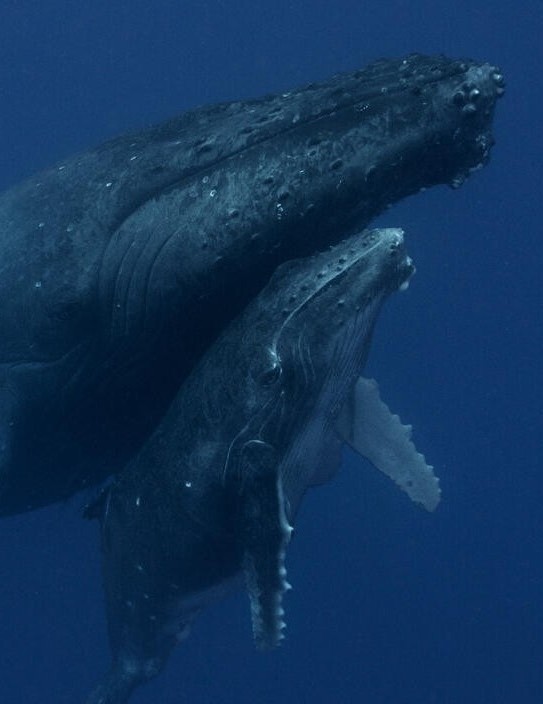
Many species spend much of their lives in areas beyond national jurisdiction, where governance gaps have long limited effective protection. These include migratory sharks and rays, pelagic fish, seabirds and wide-ranging marine mammals, species that cross national waters and rely on connected, well-managed ocean ecosystems throughout their life cycles.
Through its grant-making initiatives, SOS is already helping to generate the science, partnerships and local action that the BBNJ Agreement now makes possible at global scale.
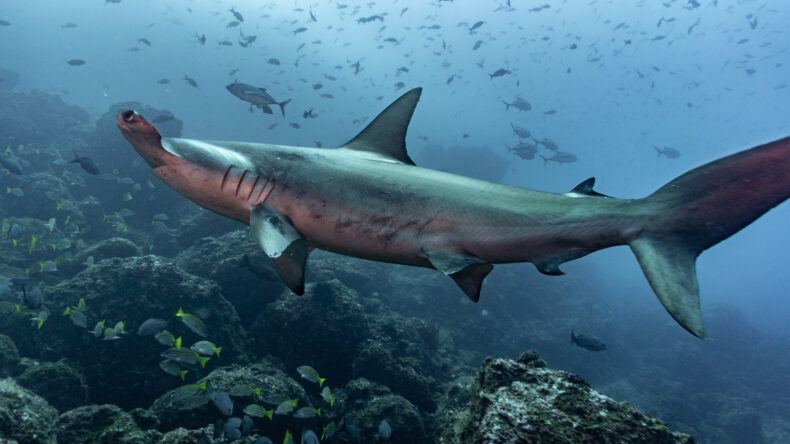
In Costa Rica’s Golfo Dulce, for example, our partnership with Misión Tiburón empowered coastal communities to protect the Critically Endangered scalloped hammerhead shark, a migratory species that regularly moves between national waters and the High Seas. Tagging and nursery-habitat monitoring helped demonstrate the area’s importance for juvenile sharks and supported the expansion of marine protection in the region. Such site-based evidence is essential for the future designation of High Seas marine protected areas under the new Treaty.
SOS projects are also supporting migratory shorebirds that depend on long flyways spanning multiple countries and international waters. In coastal Bangladesh, SOS-funded research mapped critical sites and threats for globally threatened species such as the Critically Endangered spoon-billed sandpiper and the Endangered Nordmann’s greenshank, generating data that can inform international cooperation along key migration routes.
The Agreement opens a new era for ocean protection. It enables the establishment of marine protected areas on the High Seas, strengthens environmental impact assessments for ocean activities, improves coherence across existing ocean governance bodies, and ensures fair and equitable sharing of benefits from marine genetic resources. Together, these tools are critical for delivering the global ambition to protect at least 30% of the ocean by 2030 and for halting the decline of wide-ranging and migratory species.
“The international community has taken a decisive step toward protecting the ocean as a common heritage of humankind,” said Dr Grethel Aguilar, IUCN Director General, in her statement marking the entry into force of the Treaty. “This Agreement transforms decades of science, advocacy and diplomacy into concrete tools for action.”
IUCN has played a leading role in shaping the BBNJ process over more than two decades, including through the work of its Commissions and High Seas Advisory Group. As implementation now begins, SOS stands ready to contribute its field-based experience, species data and partnerships to help translate this landmark Agreement into tangible outcomes for threatened marine species and the communities that depend on healthy oceans.
With attention now turning to the first Conference of the Parties and the establishment of institutions and financing mechanisms, the coming months will be decisive. For SOS, this new global framework offers an important opportunity to strengthen and expand our engagement in marine areas beyond national jurisdiction.
We look forward to enhancing our work in these ecosystems, supporting the protection and recovery of threatened species across the High Seas and helping turn international commitments into lasting conservation impact.