As 2025 comes to an end, we reflect on a year defined by measurable impact, new partnerships, and powerful community leadership across the globe. Across our initiatives, IUCN Save Our Species and the Integrated Tiger Habitat Conservation Programme (ITHCP) have, over the years, supported nearly 400 conservation projects worldwide, collectively contributing to the protection of more than 500 threatened species. These long-term efforts continue to restore habitats, strengthen local livelihoods, and empower communities to steward the biodiversity on which they depend.
From the rainforests of Madagascar to Europe’s pollinator corridors, from Asia’s tiger landscapes to Africa’s savannahs and river systems, this year demonstrated that conservation succeeds most where science, local knowledge, and community ownership converge.
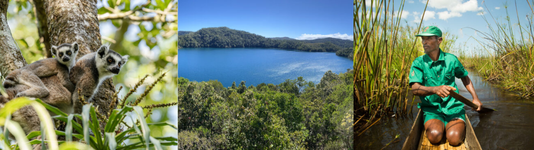
Protecting lemurs, protecting Madagascar
With 98% of lemur species threatened by extinction, the urgency in Madagascar remains acute. Yet in 2025, meaningful progress continued to emerge under the second phase of SOS Lemurs (2023-2029).
Early in the year, SOS Lemurs Phase II launched 11 new large-grant projects, building on the legacy of Phase I, which supported the protection of 63 lemur species across 49 projects between 2017 and 2023. A second call for proposals in May further expanded opportunities for Malagasy civil society organisations to design conservation solutions tailored to their communities’ needs. Through this call, approximately twelve additional civil-society-led projects are set to get underway by early 2026.
Throughout the year, partners supported habitat restoration efforts through native tree planting, expanded sustainable livelihood options, strengthened local governance, and embedded environmental stewardship into community development. On World Lemur Day, we celebrated the communities, youth groups, local NGOs, and community leaders working tirelessly to secure the future of the world’s most threatened group of primates.
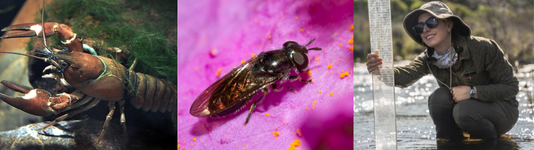
Action for biodiversity in Europe
2025 also saw two ambitious, EU-supported initiatives that demonstrate how innovation and youth engagement are transforming conservation across Europe:
- The European Invasive Alien Species Rapid-Response Fund, launched in May, enables countries to act early, before new incursions become costly and time-consuming to manage. With grants of €10,000–€50,000 for 12-month interventions, the fund accelerates early-action efforts across the continent.
- The European Fund for Youth Action on Pollinators, launched in June, empowers youth to design and lead pollinator-focused solutions. Offering grants to both young individuals (up to €15,000) and youth-led organisations (up to €70,000), the fund seeks to advance the implementation of the EU Pollinators Initiative and strengthen the next generation of environmental leaders.
- Youth engagement also took centre stage beyond Europe. In March, we hosted the webinar Youth in action: from calling to career which highlighted the experiences of young conservationists worldwide and the growing impact of youth-led biodiversity action.
These programmes highlight how rapid support and youth engagement are reshaping conservation practice across Europe.
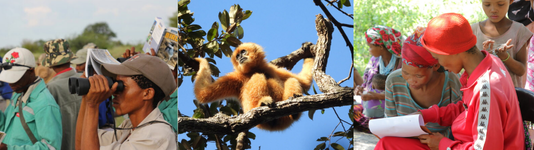
Tourism supporting conservation: a new partnership with TUI Care Foundation
In June, we announced a new partnership with the TUI Care Foundation to harness responsible tourism for conservation and community wellbeing:
- In Namibia, Indigenous San communities steward more than 18,000 km² of critical habitat for elephants, lions, leopards, and rhinos. A three-year initiative will strengthen community wildlife governance while creating sustainable jobs as guides, hospitality professionals, and tourism operators.
- In Cambodia’s Veun Sai Siem Pang National Park, a two-year project supports community monitoring of the Endangered northern yellow-cheeked crested gibbon, while developing nature-based tourism grounded in cultural identity and ecological pride.
These efforts reaffirm a core principle: when communities benefit from wildlife, conservation becomes a shared priority.
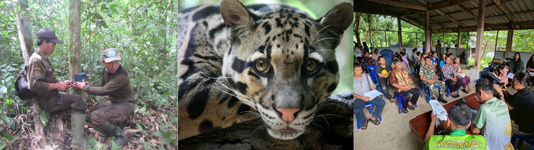
Tigers and the power of community leadership
On Global Tiger Day we celebrated a decade of community-led success under ITHCP, supported by the German Cooperation via KfW Development Bank. Since its launch in 2014, ITHCP has invested €47.5 million across 36 projects in seven tiger-range countries — restoring and connecting over 10,500 hectares of habitat, planting more than 500,000 trees to strengthen ecological corridors, and supporting 95,000 people through livelihoods, clean energy, and human-wildlife coexistence. The programme has contributed to the estimated 40% increase in tiger numbers globally between 2015 and 2022. To honour these achievements, ITHCP unveiled a new video celebrating the people whose dedication is helping tiger populations rebound, offering a compelling reminder that coexistence is possible when communities are empowered to lead.
This year also strengthened collaboration across the tiger landscapes. Two regional events in Thailand brought partners together to exchange expertise: a training workshop on tiger and prey research and monitoring in September in Bangkok, and the ITHCP grantees workshop in November in Kanchanaburi. Together, they highlighted practical lessons on monitoring, promoting human-wildlife coexistence, community-led enterprises, smart-patrol systems, and regional cooperation, reaffirming that lasting success relies on empowered communities and strong partnerships.
This year also marked the launch of the first ITHCP grantees exchange programme, designed to strengthen peer learning across the portfolio. The initiative provides small funding to enable exchange visits between ITHCP project sites, allowing grantees to share knowledge, build technical skills, and apply lessons learned to enhance conservation impact across tiger landscapes.
Celebrating African conservation success
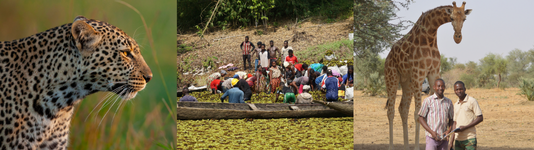
Throughout 2025, the African Wildlife Initiative celebrated a series of conservation milestones across West, Central, Eastern, and Southern Africa, bringing together grantees, government partners, and community leaders through regional workshops and the launch of new country briefs.
For West and Central Africa, the workshop in Saly, Senegal accompanied the release of updated briefs for Cameroon, Niger, and the Democratic Republic of Congo, highlighting strengthened community stewardship and improved conservation governance. For Eastern & Southern Africa, partners gathered in Nairobi, Kenya to review advances in species conservation across the region, new briefs for Kenya and Uganda were launched outlining national priorities and emerging opportunities for species and habitat recovery. The year concluded in Pretoria with the South Africa workshop and the launch of the region’s final country brief, offering a consolidated picture of progress and future needs across South Africa’s conservation landscape. Together, these workshops and their accompanying briefs reinforced the value of coordinated regional action, evidence-based planning, and locally driven conservation across the continent.

A landmark moment at the IUCN World Conservation Congress
October marked a defining moment when conservation leaders from around the world gathered in Abu Dhabi for the IUCN World Conservation Congress. At the heart of the Congress, IUCN Members adopted a 20-year strategic vision Unite for Nature on the Path to 2045 and the IUCN Programme 2026–2029, positioning species conservation as central to global efforts tackling biodiversity loss and climate change.
Congress also launched the Abu Dhabi Call for Action on Species Conservation and critical new tools and hosted sessions that emphasized that robust data, strong partnerships, and accountability mechanisms are essential engines of progress. Have a look at our Congress key takeaways here.
Fondation Segré report highlights conservation gains
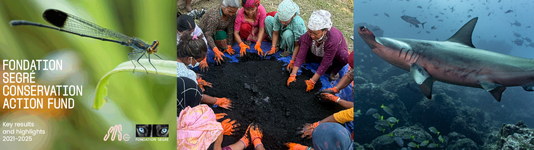
The new Fondation Segré Conservation Action Fund: Key results and highlights 2021–2025 report celebrated years of partnership between IUCN Save Our Species and Fondation Segré to protect overlooked and threatened species around the world.
Across 41 countries, the fund supported:
- 150+ threatened species, including 45 Critically Endangered and 60 Endangered species
- 50 fish species, 41 mammals, 26 reptiles, 22 invertebrates, and 13 birds
- Solutions led by local organisations, Indigenous communities, and women’s cooperatives
The report showcases how small, strategic grants can achieve remarkable conservation outcomes, supporting both biodiversity and local livelihoods. Through a combination of research and action grants, the Fund empowers local organisations to implement species conservation projects across 41 countries, helping to restore habitats, strengthen community stewardship, and inform national biodiversity strategies.
Advancing freshwater conservation across Europe and beyond
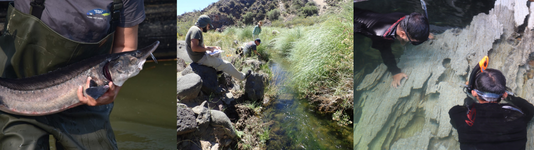
In 2025, freshwater conservation gained significant momentum across our programmes. A major highlight was the release of juvenile Danube sturgeons, an important step in restoring one of Europe’s most threatened fish groups. This work, supported by La Prairie Group through the SOS Sturgeons initiative, reinforces long-term recovery plans and community engagement along the river.
Freshwater action was also featured at the IUCN World Conservation Congress through The Nature of Success, a publication showcasing how partnerships with business are helping revive wetlands and river systems across Europe and beyond.
To strengthen global collaboration, IUCN Save Our Species hosted the December webinar Flowing together: safeguarding freshwater species, bringing together experts and grantees from SOS Sturgeons, the Fondation Segré Conservation Action Fund, and global initiatives like SHOAL. The session highlighted the scale of freshwater biodiversity loss and shared practical, science-based solutions for reversing species declines.
Honouring a conservation icon
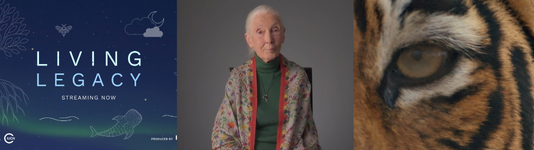
The Congress took on profound significance following Dr. Jane Goodall’s passing on 1 October at age 91. As a long-standing member of the IUCN Species Survival Commission and Patron of Nature, Jane’s legacy shaped every aspect of conservation work worldwide.
At Congress, the BBC and IUCN previewed Living Legacy, a global storytelling series narrated by Dr. Goodall. The series officially launched at COP30 in Belém, featuring an ITHCP-supported story from Nepal highlighting coexistence between communities and tigers, a fitting tribute to Jane’s belief in hope, compassion, and community leadership.
What we’ve learned: the path forward
Five lessons will guide our work into 2026 and beyond:
- Fund community-centred conservation. The most successful projects put local voices in the driver’s seat from day one.
- Back young scientists and emerging leaders. They bring the creativity and urgency needed to drive innovation.
- Integrate livelihoods with conservation. When people benefit from protecting nature, conservation becomes sustainable and self-reinforcing.
- Plan for long-term resilience. Quick wins matter, but lasting impact requires thinking beyond single project cycles.
- Scale equitably, not just geographically. True scale means deeper influence, embedding conservation in policy, finance, governance, and culture.
Every species we protect, every hectare we restore, every community we empower brings us closer to a world where biodiversity and human wellbeing can thrive together. This year’s achievements across our global portfolio point to a shared, transformative truth:
Conservation works when it centres local voices, draws on rigorous science, strengthens rights and livelihoods, and ensures communities benefit from protecting the nature around them.
Thank you to all our partners, donors, grantees, and supporters who made 2025 a landmark year in species conservation. The work continues, the momentum grows, and together we are proving that even the world’s most threatened species can find a path forward when humanity chooses collaboration, courage, and hope.
Have a wonderful year!
– The IUCN Save Our Species and Integrated Tiger Habitat Conservation Programme teams