
For more than a decade, tiger conservation has been one of the world’s great conservation success stories. Populations are recovering across parts of Asia after decades of decline, demonstrating what sustained investment, strong partnerships and science-based conservation can achieve.
But recovery is only part of the story.
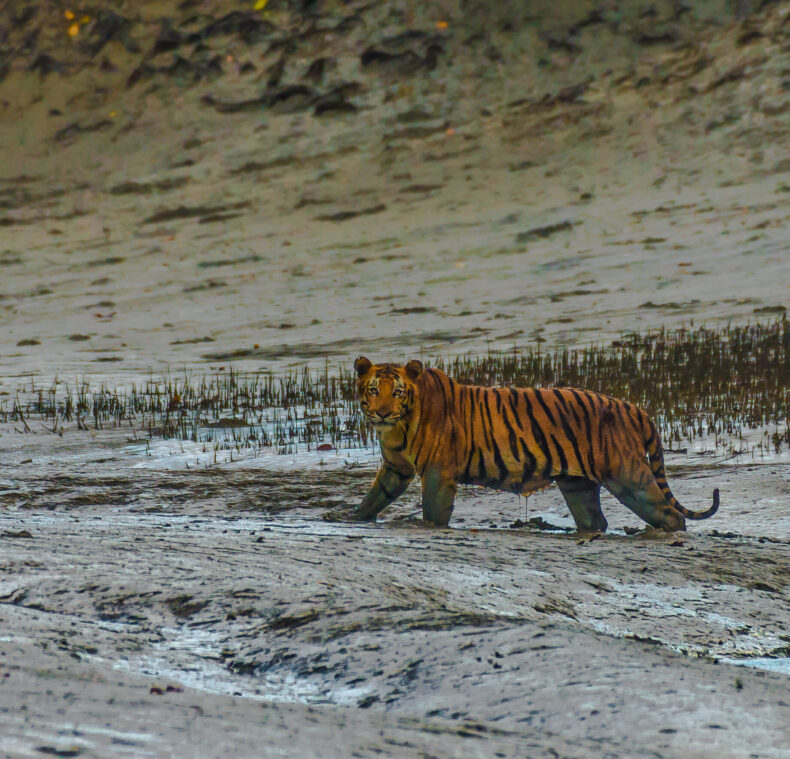
As tiger populations recover across parts of Asia, people and wildlife are increasingly sharing the same landscapes. Communities living alongside tigers are increasingly navigating the challenges of protecting their livelihoods, livestock and, in some cases, their own safety. Ensuring that conservation delivers for both people and wildlife is becoming one of the defining challenges of tiger conservation.
This Global Tiger Day (29 July), IUCN is highlighting the effective, locally led solutions helping to enable coexistence while celebrating the communities, conservation practitioners and partners working every day to secure a future for both people and tigers.
Under this year’s theme, “Coexistence in action: Scaling solutions for people and tigers,” the focus is on the people working to enable coexistence on the ground. Indigenous Peoples, local communities, governments, conservation organisations and frontline teams all play a critical role in reducing conflict, improving safety and securing a future where people and tigers can thrive together in increasingly shared landscapes.
“Conservation success cannot be measured by species recovery alone,” said Ana Nieto, Global Head of Species Conservation Action at IUCN. “Lasting success depends on whether people living alongside wildlife are safer, better supported and able to benefit from conservation. Coexistence is not simply an outcome; it is the foundation of effective tiger conservation.”
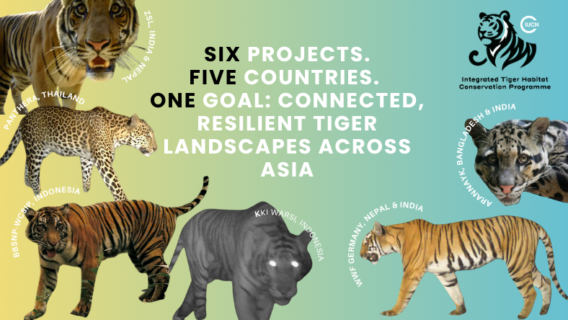
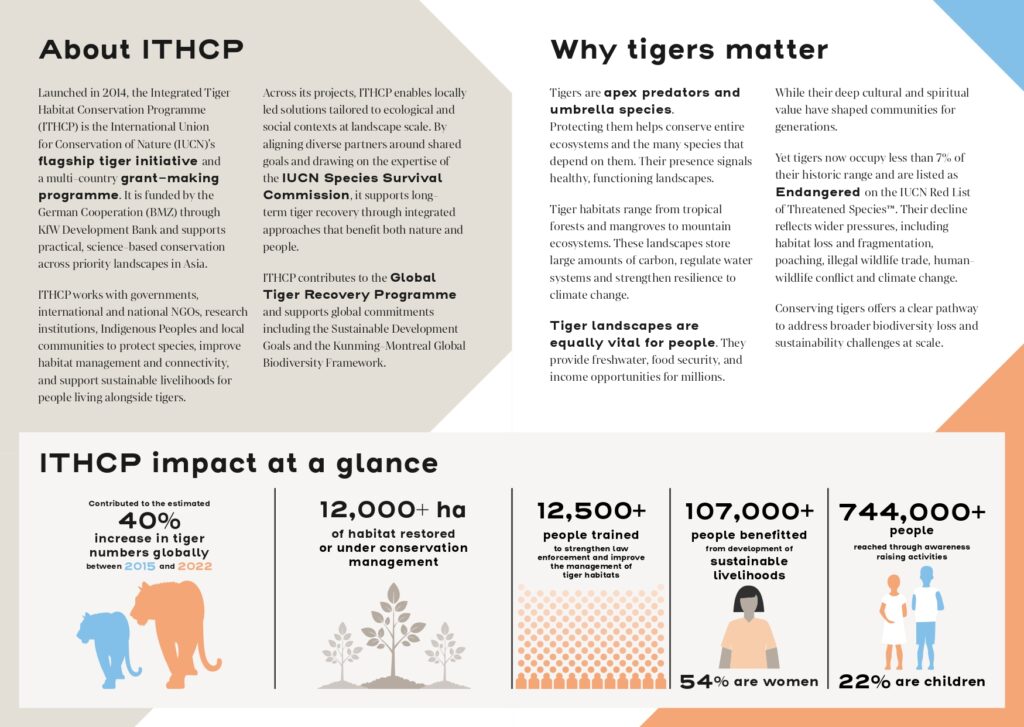
IUCN contributes to tiger conservation through the Integrated Tiger Habitat Conservation Programme (ITHCP), its flagship tiger initiative funded by the German Cooperation (BMZ) through KfW Development Bank.
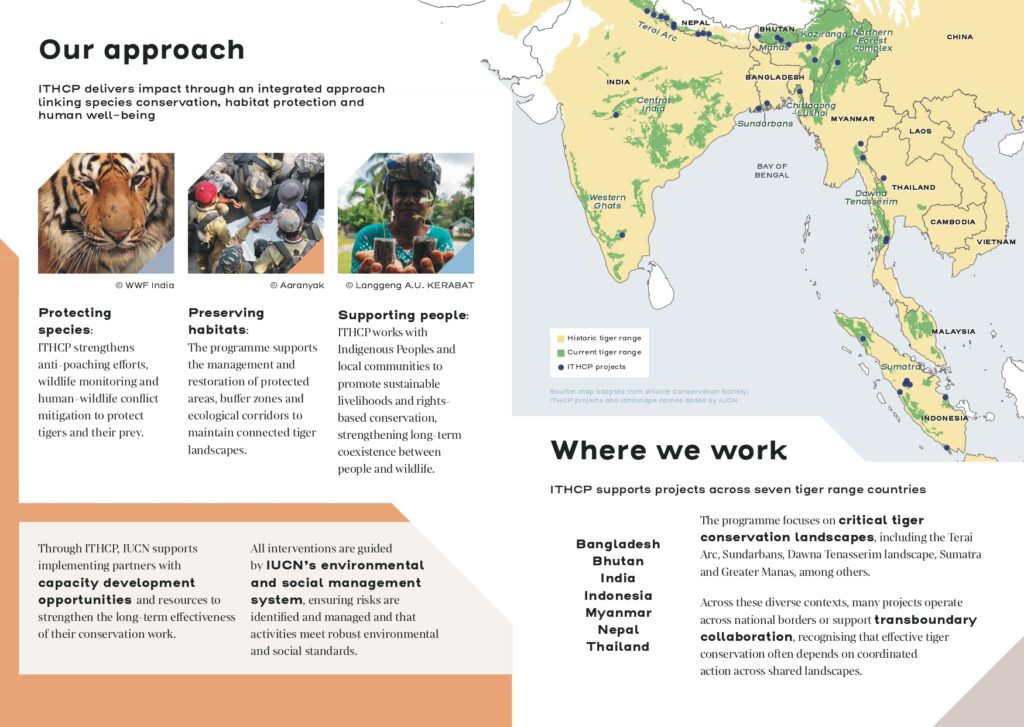
Working across Bangladesh, Bhutan, India, Indonesia, Myanmar, Nepal and Thailand, ITHCP supports local communities, conservation organisations and governments to strengthen habitat protection, tackle poaching, restore degraded forests and develop practical solutions that help people and tigers coexist safely.
These efforts have contributed to the estimated 40% increase in global tiger numbers between 2015 and 2022, demonstrating how long-term investment, landscape-scale conservation and strong partnerships can help recover threatened species while supporting people and ecosystems.
Across priority tiger landscapes, more than 12,000 hectares of habitat have been restored or brought under improved conservation management, helping reconnect forests that are essential for tigers and countless other species. More than 12,500 people have been trained to strengthen law enforcement and improve the management of tiger habitats, while over 107,000 people have benefited from sustainable livelihood opportunities, human-wildlife coexistence measures and access to clean energy solutions, with women representing 54% of beneficiaries. Awareness-raising initiatives have also reached more than 744,000 people, including over 170,000 children, helping build long-term support for tiger conservation across the region.
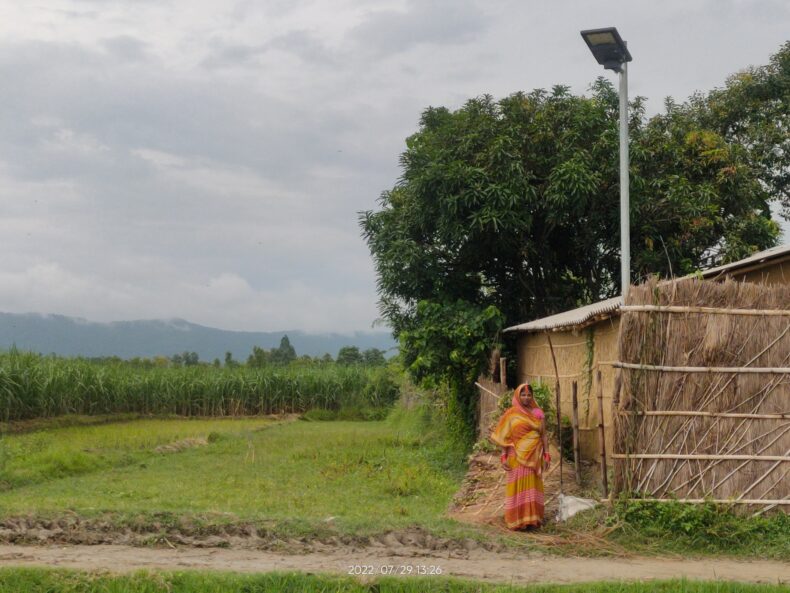
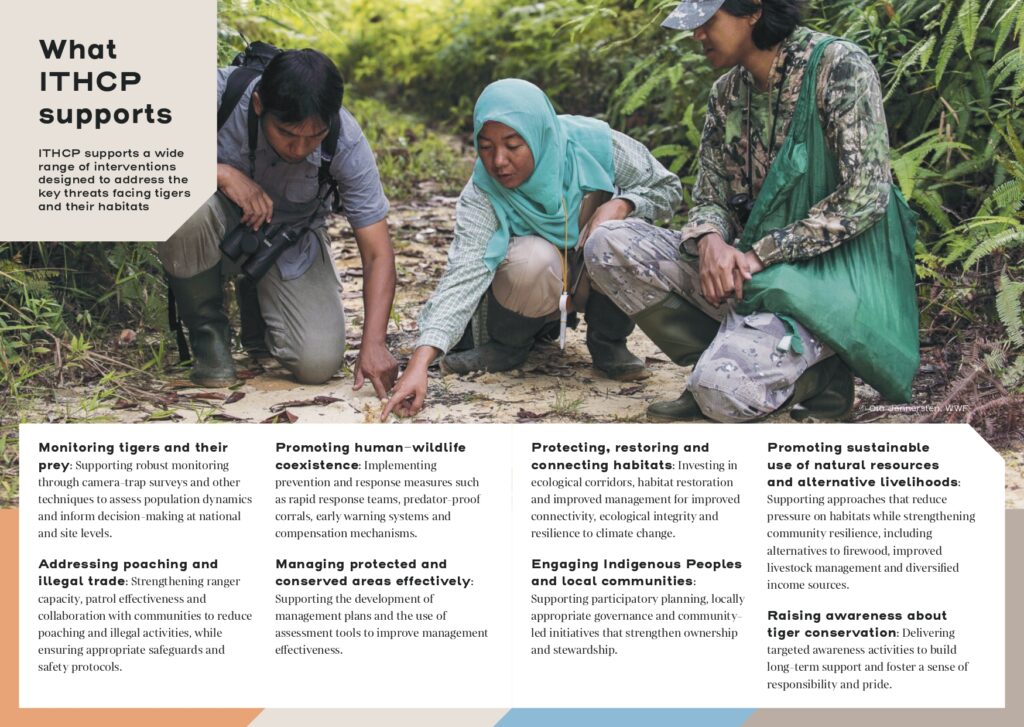
On the ground, ITHCP partners are helping communities reduce the risks associated with living alongside tigers through practical measures such as predator-proof livestock corrals, solar fencing, early warning systems, Rapid Response Teams, and community-based monitoring. Sustainable agriculture, eco-tourism and other locally led livelihood initiatives are also helping reduce reliance on forest resources, lowering the likelihood of dangerous encounters with wildlife while strengthening community resilience.
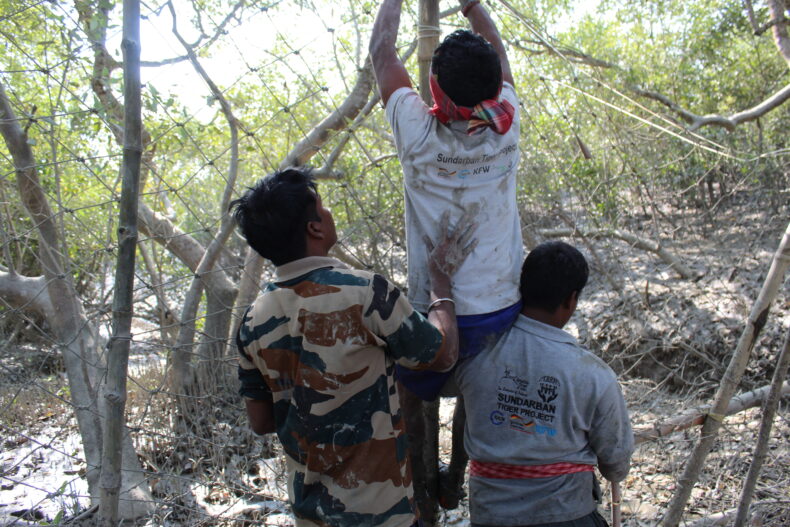
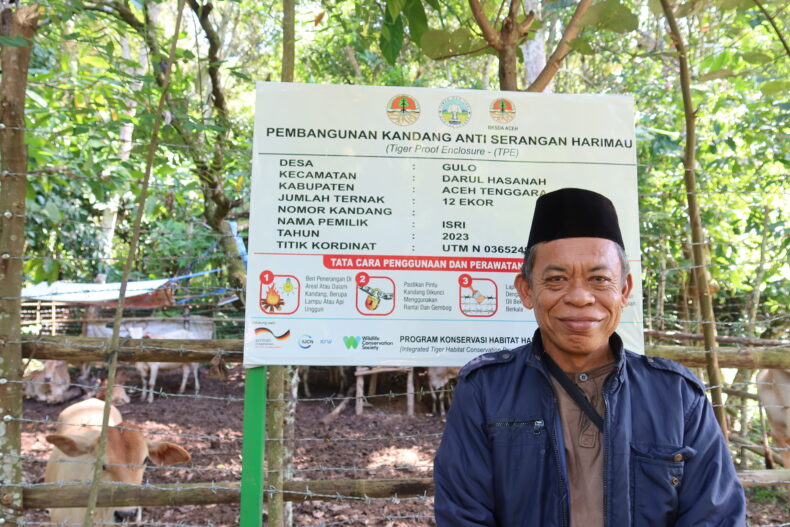
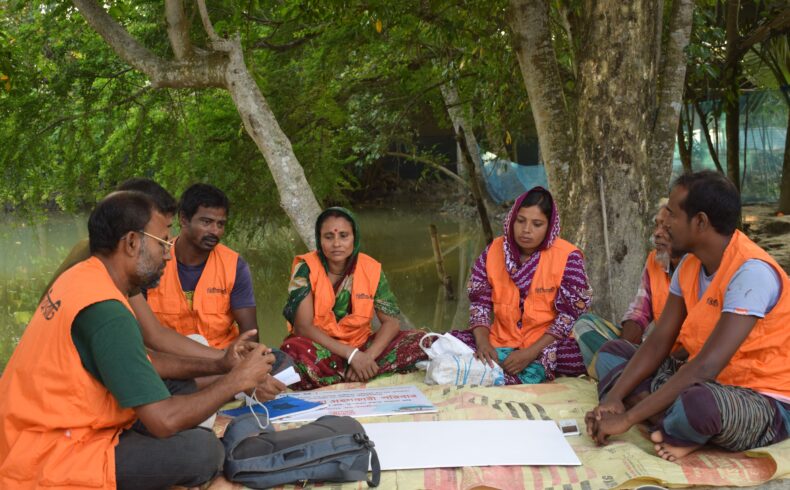
Global Tiger Day will also showcase IUCN’s work across Asia, with three IUCN offices hosting or contributing to locally led events highlighting practical coexistence solutions and the experiences of communities living alongside tigers. Bringing together partner organisations implementing ITHCP-supported initiatives, local stakeholders, government representatives, conservation practitioners and community members, these events will create opportunities to exchange knowledge, strengthen partnerships and demonstrate how coexistence is being put into practice across some of Asia’s most important tiger landscapes.
Healthy tiger landscapes support far more than tiger populations alone. They conserve biodiversity, maintain ecological connectivity, strengthen climate resilience and safeguard freshwater resources for millions of people across Asia. In this context, coexistence approaches contribute directly to wider international commitments, including the Global Tiger Recovery Programme, the Kunming-Montreal Global Biodiversity Framework (particularly Target 4 on species recovery and coexistence), the Sustainable Development Goals, and broader climate and restoration agendas.
None of these achievements would be possible without the leadership of Indigenous Peoples, local communities, conservation practitioners, governments and implementing partners working across Asia’s tiger landscapes. This Global Tiger Day, IUCN celebrates their commitment and the practical solutions that are making coexistence possible every day.
Across Asia, IUCN and its partners continue to advance coexistence through practical action on the ground, working with local communities to support people living alongside tigers and help ensure that the recovery of this iconic species is matched by safer, more resilient landscapes.
Learn more: